About Pallas
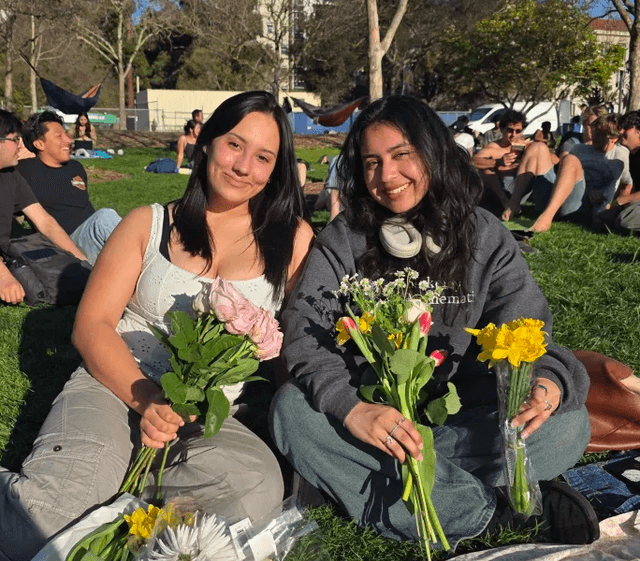
We're Diya and Zoe.
UC Berkeley seniors in Applied Mathematics and Computer Science. We build with AI professionally. We're not here because we're afraid of technology. We're here because we can see what's coming and most people can't yet.As students at one of the top universities in the country, we watch peers who got here on talent struggle to produce original work without a tool for the first draft. As tutors, we've worked with students one-on-one and watched the skill floor drop in real time. People who are naturally intelligent and curious can't structure an argument, can't sit with ambiguity, can't start a sentence without prompting an AI first. And as older siblings with brothers and sisters inside the K-12 system right now, we see it at home. This isn't a theory, it's what we're watching happen to the smartest kids in the room. We started Pallas because nobody else was building what these kids actually need.
The problem nobody is naming
ChatGPT launched in late 2022. The kids who were 10 then are 14 now. They are the first generation who had AI available during the years when critical thinking, writing stamina, and intellectual independence are supposed to develop. Those skills form through discomfort; through sitting with a hard question and pushing through it without help. AI removes that discomfort entirely. It doesn't just accelerate learning, it skips from question to answer without building the neural pathways that make people intelligent.Every EdTech company is asking how to integrate AI into education. Nobody is asking what happens to a child who never learns to think without it. That's the question we built Pallas to answer.
We are AI-forward.
A calculator doesn't hurt a kid who already understands math, it hurts the one who never learned to think numerically. AI works the same way. We want every kid to use AI. That starts with building the underlying capacity first. The thinking has to come before the tool. The highest-leverage careers in an AI economy — leading teams, making judgment calls, catching what the model missed, communicating under pressure — require skills that only develop through practice.How it works.
One session a week. Small groups. A trained facilitator who asks questions and never gives answers. No screens in the room — ever. Every session is designed to do one thing: make your kid think harder than they've had to think all week.